
The time from conditional license to grand opening is the most-documented, most-audited six months of the NJ license lifecycle, and mistakes made here don’t get a do-over.
If you have a conditional license on the wall, a buildout timeline that’s running ahead of reality, and a conversation with someone from the CRC that hinted your floor plan had a problem, read the first 30 seconds of this. The pre-opening stretch is where conditional becomes operational, and the misses here end up in regulatory findings before you’ve done a single transaction.
Most conditional-license holders know the application answers; what they don’t know are the seven specific oversights that turn a buildout into a 90-day reconversion. Site selection, floor layout, SOP timing, surveillance coverage, municipal approvals, the conditional-to-operational handoff, hiring sequence. Each one is fixable when caught early. Each one is a six-figure problem when caught at the CRC’s final walk-through.
JUMP TO THE OVERSIGHT YOU NEED TODAY
AT A GLANCE: 7 PRE-OPENING OVERSIGHTS
Most of these are fixable in week four. Almost none of them are fixable at week sixteen.
- Site zoning + buffer
- Floor-plan compliance
- SOP timing
- Surveillance coverage
- Municipal approvals
- Conditional → operational handoff
- Hiring sequence
↓ Pick an oversight below to see what the mistake looks like in practice and the diagnostic to run this week.
When the NJ Pre-Opening Phase Runs on Schedule
A 30-second read of the phases a conditional license typically moves through on the way to opening day, and what an on-schedule run looks like at each milestone. The framework reflects how the CRC and municipal calendars tend to align; confirm specifics against the current rule set and your compliance officer.
| PHASE | TYPICAL WINDOW | WHAT “ON SCHEDULE” LOOKS LIKE |
|---|---|---|
| Conditional license issued | T-12 to T-9 months | Application approved; site not yet selected |
| Site contract signed | T-9 to T-7 months | Lease or sales contract signed; municipal cannabis ordinance + zoning confirmed |
| Site plan + build-out complete | T-6 to T-4 months | Architect and security designer signed off; CRC layout approval; construction complete |
| SOPs drafted + staff trained | T-4 to T-3 months | Operations / receiving / destruction / cash / security SOPs drafted and trained; general manager in seat |
| Final CRC + municipal inspection | T-2 to T-1 months | State walk-through scheduled; certificate of occupancy issued; fire marshal sign-off |
| Annual license conversion | T-0 | Conditional license converts; opening day |
01
OVERSIGHT 1 OF 7
Choosing a Site That Isn’t Actually Permittable
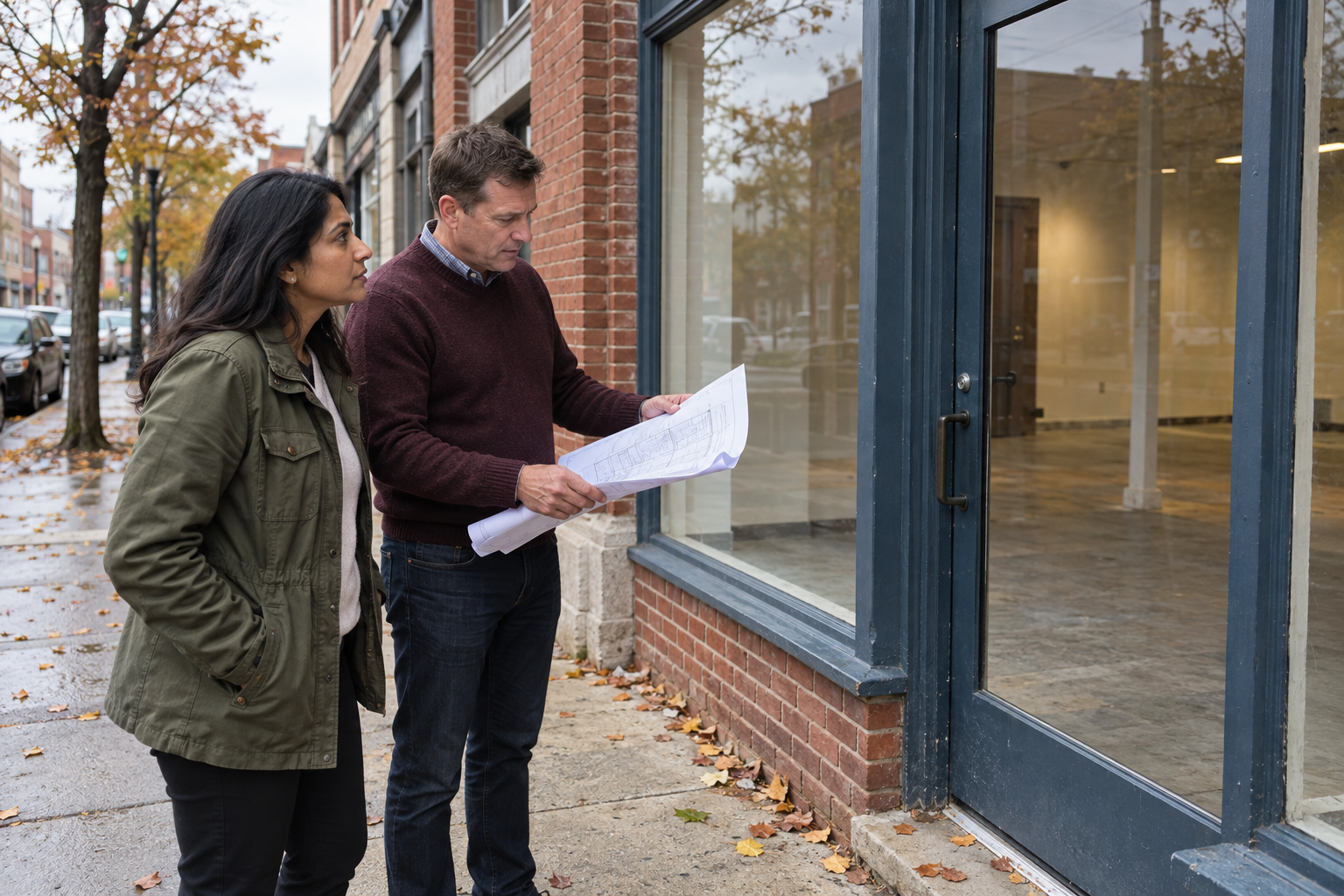
Watch for this: your conditional license is in hand and you’ve picked a site, but you haven’t yet confirmed the site is in a zone where cannabis retail is allowed.
WHAT IT LOOKS LIKE
The conditional license allows you to operate… eventually. It does not certify that any specific address is permitted to host the operation. NJ dispensary applicants routinely select sites that look correct on a state zoning-buffer map (not within the state-mandated buffer from a school or youth-serving location) and fail at the municipal layer: the host town or borough has its own cannabis ordinance with stricter setbacks, default-buffer overlays, parking ratios, or outright restrictions that don’t appear until you read the local rules.
Some municipalities freeze new cannabis applications while early operators open; some require a planning or zoning board approval that takes 90–120 days on top of the CRC track. Sign a 10-year lease without confirming those three layers in writing, and you can be sitting on a buildout site that doesn’t carry an operating license in twelve months.
QUICK DIAGNOSTIC
- Has the host municipality’s cannabis ordinance (or municipal cannabis resolution) been pulled, in writing, by you, this quarter?
- Is the property within both the state buffer AND the host town’s local buffer to schools or youth-serving locations?
- Has the planning or zoning board approval (when one is required) been locked to a calendar that anchors the buildout start date?
- Does the lease contingency run on a green light from the CRC permit, not on a lease commencement date 60 days sooner?
- Does the landlord know what they’re renting to, and have they signed off in writing?
See also: Oversight #5, Municipal Approvals. Site selection and municipal approvals are the same problem, six months apart.
Why it compounds: A non-permittable site generates every downstream dependency, re-design, re-permit, re-engineer. You tell the hold group “six weeks” for what turns out to be a six-month problem.
02
OVERSIGHT 2 OF 7
Floor Layout Design That Fails the State Walk-Through
Watch for this: your architect’s drawings pass building code but don’t pass state surveillance coverage, queue management, and secure-vault access.
WHAT IT LOOKS LIKE
The architectural drawings for a cannabis store carry three layers: building code, brand experience, and state compliance. The third layer is what most floor plans treat last. The CRC’s final inspection reads the floor plan for: surveillance camera coverage with no blind spots across the sales floor, product storage, vault and cash-handling areas; a single ingress that security can monitor; a queue flow that doesn’t require staff to step around customers to reach the restricted area; a vault with appropriate fire suppression and a single access path; an ADA-accessible path through the store that meets accessibility standards without crossing the security checkpoint.
Floor plans that the architect calls done in week 8 often need a complete redraw at the state inspection in week 22, because the camera-coverage map creates a blind spot behind the safe, or the queue routing forces the budtender to walk through the consultation area to restock.
QUICK DIAGNOSTIC
- Has the camera coverage map been overlaid on the floor plan at the final walk-through stage, not just on the installer’s site plan?
- Does the floor plan route all staff ingress through the same security checkpoint that the cameras can see?
- Is the vault on a single secured access path with no dead-zone between the safe and the camera sightlines?
- Has the queue flow been walked by an actual budtender (not the architect), and timed end-to-end at expected peak volume?
- Does the ADA-accessible path NOT cross any restricted-access boundary, and is that path documented separately from routine staff traffic?
See also: Oversight #3: SOPs. The floor plan determines where SOPs draw their physical lines, locking one without the other breaks the audit mirror.
Why it compounds: A non-compliant floor plan forces re-construction during the inspection window, which forces re-engineering of surveillance, which forces re-training on the SOPs, which pushes the annual-license conversion out 60–120 days.
03
OVERSIGHT 3 OF 7
Writing SOPs After Construction, OR Writing Them From a Template
Watch for this: your SOPs were drafted in week 18, or drafted in week 8 from a template used by the previous operator in a different state.
WHAT IT LOOKS LIKE
SOPs in a dispensary are the audit trail for everything: receiving, inventory reconciliation, destruction, cash handling, security incidents, patient consultation, vendor chain of custody. NJ inspectors read SOPs to see whether the actual operation matches what the SOP says. There are two versions of this oversight: writing them too late, and writing them from a template that doesn’t match your floor. Each fails the same audit.
The first version fails because staff have trained on improvisation, not on procedures. The second version fails because the SOP says one thing and the physical layout means staff do another. The fix is to draft the SOPs during construction while the floor still lives in the architect’s drawings, so the SOP and the as-built match by inspection day, not by simulation. The most common gap is the destruction SOP, the version that names the form, the witness, the Metrc event, and the chain of custody. If that SOP doesn’t exist, the inspector’s first finding is on it.
QUICK DIAGNOSTIC
- Were the SOPs drafted in week 10–14, while the floor plan was still fluid, not week 22?
- Is every SOP specific to the actual physical layout, the actual POS workflow, and the actual Metrc integration, not generic across cannabis states?
- Has every staff role signed off in writing on the SOPs they will execute?
- Does the receiving SOP walk from Metrc tag acceptance → QA sampling → storage in a single flow?
- Is there a destruction SOP that names the form, the witness, the Metrc event, and the chain of custody, and is that document version-controlled?
- Are corrective-action SOPs distinct from baseline SOPs, and have they been re-read since the last floor plan revision?
See also: Oversight #6: License Transition. The conversion runs on the SOPs. If the SOPs aren’t ready, the conversion extends.
Why it compounds: SOPs drafted late or by template become the documentation under which every compliance audit for the next 18 months runs. Catch the gap now, or carry it under every finding the operator hands the CRC for years.
04
OVERSIGHT 4 OF 7
Surveillance & IT That Meets the Minimum, Not the Operational Reality
Watch for this: your surveillance camera count meets NJ’s minimum, but the POS-Metrc pipe and the network redundancy haven’t been load-tested under stress.

WHAT IT LOOKS LIKE
Cannabis retail in NJ has a minimum camera count for a reason. Namely, accountability in the inventory chain. But meeting the minimum and meeting the operational reality are two different things. A system that passes inspection has 30-day retention at usable resolution, coverage with no blind spots over the sales floor and vault, and camera placement that doesn’t put a staff member in a position to be the only witness to a high-value transaction.
A system that runs the operation has redundant enterprise broadband (because Metrc upload failures are the operational crisis you can’t simulate in pre-opening), a failover POS-as-a-service contract that activates inside 24 hours, and IT architecture that separates the surveillance layer from the point-of-sale layer from the staff-management layer, so an incident in one doesn’t cascade into another. Most conditional-license holders get the minimum; few get the resistance to a single point of failure.
QUICK DIAGNOSTIC
- Has the camera count been validated against coverage submitted to the CRC, not counted as the camera-count basis the installer sold against?
- Does the network have redundant ISP paths, not a single-cable Comcast or Verizon?
- Is the Metrc integration tested end-to-end on a test license, not just on a mock inventory?
- Is the POS contract structured for failover in under 24 hours, not 5-day replacement?
- Is the network segmentation documented in writing, surveillance, POS, staff-management?
- Does the system archive 30+ days at usable resolution, and is that retention testable, not aspirational?
See also: Oversight #2: Floor Layout. Surveillance shapes the floor plan; locking one without the other misses the cross-check.
Why it compounds: A surveillance / IT failure during pre-opening is the version of the problem that delays the annual-license conversion and adds an extra Metrc audit before you ever sell.
05
OVERSIGHT 5 OF 7
Treating the CRC as the Only Approval You Need
Watch for this: the CRC application is moving, but you haven’t yet talked to the local planning board, the zoning certificate clerk, or the fire marshal.
WHAT IT LOOKS LIKE
NJ state approval (the CRC) and municipal approval are two separate processes on two separate timelines with two separate gates. The CRC oversees the cannabis license, the Metrc registration, the conditional-to-operational conversion. The host municipality oversees zoning certification, planning board approval when required, building permits, fire inspections, certificate of occupancy. A common oversight is treating the CRC timeline as the buildout timeline, and discovering in month 4 that the building permit won’t issue until the planning board signs off, which won’t happen until the local cannabis ordinance has been amended to include your zoning class, which won’t happen until a public hearing is scheduled.
The planning board calendar, the building department’s review cadence, and the fire marshal’s inspection timing don’t align automatically with the CRC timeline. Operators who do align them from week one run two months faster than operators who discover the gap at week sixteen.
QUICK DIAGNOSTIC
- Have you confirmed, in writing, which local cannabis ordinance or resolution applies to this specific property?
- Has the planning board signed off where one is required, and is the date on the actual published calendar?
- Has the building department approved the permit, and is the inspection timeline stated in the permit letter, not estimated?
- Has the fire marshal’s pre-walk been scheduled, and is the marshal familiar with the surveillance plan?
- Has the certificate of occupancy been priced into the construction schedule before construction finishes, not after?
- Is the local police department notified, and do they have a copy of your security plan and the camera map?
See also: Oversight #1: Site Selection. Site selection and municipal approvals are the same conversation, six months apart.
Why it compounds: A municipal-approval gap doesn’t show up as a CRC finding. It shows up as a delayed CO, a delayed building permit, or worse, a stop-work order. Any of those eats your pre-opening runway and pushes the annual-license conversion forward by 60–120 days.
06
OVERSIGHT 6 OF 7
Operating As If the Conditional License Is Already the Operating License
Watch for this: you’ve started vendor relationships, hired for opening, or seeded Metrc under the assumption that the conditional license is the operating license, when it isn’t.
WHAT IT LOOKS LIKE
This is the oversight the hook calls out by name. A conditional NJ cannabis license permits you to undertake every activity that moves the application toward an operational license, site selection, buildout, SOP drafting, hiring in some cases, but it does not give you the authority to operate retail. Operating retail under a conditional license is the kind of error that doesn’t get cured quietly; it lives in the licensing file and follows the operator through every subsequent license renewal and conversion.
The common tells: opening doors for a soft launch to a tiny group before the state inspector’s walk-through completes; “beta-testing” the POS in front of a real customer; running a vendor ordering protocol against a not-yet- active Metrc tag; signing patient cards before the conversion is actually approved in writing. Each of these is the kind of paperwork move the inspector sees when the final conversion happens, and each is an audit-ready finding the operator does not want on the conversion record.
QUICK DIAGNOSTIC
- Has the conditional license been confirmed, in writing, as the right license to be operating under, this calendar quarter?
- Have all SOPs been finalized AND staff-trained BEFORE the final walk-through with the state, not during, not after?
- Has the final inventory been reconciled against Metrc tag acceptance at the final inspection, not at the soft launch?
- Has every staff member been background-checked and badged BEFORE being walked into the vault, not after?
- Has the conversion paperwork been initiated and is it on the inspector’s desk, not just “started in spirit”?
- Has the operator’s insurance been bound to the post-conversion operational footprint, not to the buildout footprint?
See also: Oversight #4: Surveillance and Oversight #3: SOPs. The conversion runs on the surveillance audit AND the SOP file. If either isn’t ready, the conversion extends.
Why it compounds: An operating-while-conditional finding on your license file follows the operator through every future CRC filing for years. Build the conversion cleanly, or carry the finding under every renewal.
07
OVERSIGHT 7 OF 7
Hiring in the Wrong Order or Too Late
Watch for this: your budtenders are hired in week 18, your security leads in week 20, and your general manager in week 22, and the license conversion depends on all three being ready at the same time.
WHAT IT LOOKS LIKE
The hiring sequence for a NJ dispensary’s pre-opening phase is dictated by training timelines and license-conversion requirements. A general manager needs to be in seat at minimum 90 days before opening, because they own the SOP review, the staff training calendar, and the pre-conversion audit prep. Security leads need to be in seat at minimum 45 days before opening to be trained on the surveillance system, the cash-handling SOP, and the incident-response protocols.
Budtenders need 30+ days to be scheduled, trained, and certified on the POS and Metrc workflows. The operator who fills these roles in the wrong order, or who backfills the GM after the conversion has started, either scrambles the SOP training rollout or hands the conversion to a manager who hasn’t reviewed a single SOP. Each gap (security lead at conversion, GM at walk-through, budtender at POS cutover) is its own audit-ready finding.
QUICK DIAGNOSTIC
- Has the general manager been in seat at least 90 days before opening, and have they personally reviewed every SOP in writing, not just received them?
- Are security leads hired at least 45 days before opening with full SOP access?
- Have budtenders been hired AND started their training at least 30 days before opening?
- Is the staff training calendar pre-conversion AND ongoing, not a single one-time event at week 24?
- Is the closing checklist SOP owned by a specific role, not left as a generic “closing team” responsibility that no one reads?
- Are background checks and badge issuance scheduled to complete before the staff member first accesses the vault, not on their first day?
See also: Oversight #3: SOPs. The hiring sequence reads onto the SOPs. If the SOPs are drafted late, the training reads onto a manager who didn’t own the docs.
Why it compounds: The wrong hiring sequence pushes SOP training onto a manager who hasn’t owned the docs into a conversion audit. The audit takes 60–120 extra days, the opening moves, vendor relationships break, and the operational soft-launch conversations you started in week 20 get re-scoped in week 30.
If Three or More of These Oversights Apply to Your Buildout
You don’t have a buildout problem. You have a launch-discipline problem. Most of the conditional license holders who come through cleanly are the ones who treated the pre-opening phase as its own operating discipline, with its own milestones, its own checkpoints, and its own owner. The ones who don’t make it through on schedule are typically the ones still using buildout language, “the architect will fix that”, at week 18.
The window where most of these oversights are still fixable opens in week 4 and closes in week 12. After that, the operations that didn’t ship show up as line items in the CRC’s finding; the ones before it show up as signed-off checklists the inspector moves past without comment.
Operators who engage Pre-Opening & Launch Support at week 10 (rather than week 22) usually save an entire license-conversion cycle. The eight weeks that get lost to SOP rework, surveillance re-coverage, and municipal calendar reslips are the eight weeks that pull opening day into the next quarter.
Don’t navigate the pre-opening phase alone.
Operators who engage Pre-Opening & Launch Support at week 10 (rather than week 22) save an entire license-conversion cycle. We build the SOPs, walk the surveillance with your security vendor, audit the floor plan before the architect signs off final, and hand the conversion file ready for the state inspector.
→ Book a confidential pre-opening review with a launch lead.
→ SOPs that match your floor, surveillance that reads the floor plan you have, and a license-conversion file that holds up at the walk-through.
Frequently asked questions
What is the conditional NJ cannabis license?
A conditional NJ cannabis license is the entry-point license issued by the CRC that allows a holder to undertake every activity that moves an application toward an operational storefront (site selection, buildout, SOP drafting, certain hiring), but it is not the operating license. Conditional holders cannot run a fully open-for-business retail operation, and operating retail under a conditional license is the kind of paperwork move that lives on the file through every future renewal and conversion.
It’s the right starting license, and the wrong operational license. Owners differentiate them by checking their license type, in writing, every calendar quarter.
How do you convert a conditional NJ cannabis license to one that is open for business?
Conversion runs through the CRC’s final walk-through and is documentation-dependent as much as physical- build dependent. The state inspector reads the conversion file against the SOPs, the surveillance coverage map, the staff training log, the inventory reconciliation against Metrc tag acceptance, and the certificate of occupancy. When the conversion file holds together (SOPs signed off, surveillance certified, staff badged and trained, inventory reconciled to Metrc), the conditional license converts to an annual license at T-0.
The most common extensions happen when the file doesn’t hold together: SOP terminology doesn’t match the floor, the camera coverage map has a blind spot, or staff haven’t been badged before touching inventory.
How long does the NJ pre-opening phase take in practice?
Six to twelve months from CRC conditional approval to opening day, depending on the municipality, the alignment between the CRC and municipal calendars, and whether the operator starts the launch-discipline work in week four or week sixteen. The compression lever is schedule alignment: when the planning board calendar, the building department review cadence, and the CRC pre-opening track are pulled into a single operating calendar, the six-month end of the range is reachable.
When they’re treated as independent timelines, the twelve-month end is the more honest forecast, and the conversion slips further whenever a planning-board hearing or a fire marshal walk fails to align.
What should a NJ dispensary applicant look for in a site?
Three layers, not one. State: the property must clear NJ’s zoning buffer from schools and youth-serving locations, and the address must be eligible for Metrc registration. County: no conflicting land use overlay that disqualifies the parcel. Municipality: the host town or borough must have a cannabis ordinance or resolution that explicitly covers the property’s zoning class, no moratorium in effect, and, when required, a clear planning or zoning board pathway to approval.
Plus accessibility and parking that meet both ADA and the municipality’s parking ratio. The most common reason a permit pipeline collapses at week eighteen is that one of these three layers was assumed rather than confirmed in writing.
Do dispensary SOPs need to be written before opening?
Yes, and before the conversion walk-through in particular. SOPs are the audit trail the inspector reads at the CRC’s final inspection. The right window to draft them is during buildout while the floor plan still lives in the architect’s drawings, not after construction locks the as-built. Every SOP must be specific to the actual physical layout, the actual POS workflow, and the actual NJ Metrc integration, not a generic multi-state template.
The most common gap is the destruction SOP: the document that names the form, the witness, the Metrc event, and the chain of custody. If that document doesn’t exist on the inspector’s desk, it tends to become the inspector’s first written finding.
Can a conditional-license holder operate retail in NJ?
No. A conditional license permits the activities that move an application toward an operational storefront (site selection, buildout, SOP drafting, certain hiring), but it does not authorize retail operations. Operating retail under a conditional license is not cure-quiet: it lives on the licensing file and follows the operator through every subsequent renewal and conversion. The right move is to lock the conversion file BEFORE any retail activity, including soft launches, beta POS testing against real customers, vendor ordering protocols against not-yet-active Metrc tags, and signing patient cards before the conversion is approved in writing. Treat those as scope-of-work paperwork for the conversion file, not as a soft opening.
The conditional license isn’t a finish line. It’s a starting gun for the most-documented six months of the license lifecycle. Plan the conversion with the same discipline you planned the application, and the annual-license conversion lands on schedule.
